

As Haitians face life after TPS, American Baptists respond to a mounting crisis
VALLEY FORGE, PA (09/28/2026)—For some 330,000 Haitians in the United States who lost Temporary Protected Status (TPS) on July 27, the consequences are becoming increasingly stark. For those whose ability to work legally depended on TPS, the loss of work authorization has put jobs—and the income needed for rent, food, and transportation—at risk. Beyond the economic consequences, fear of detention and deportation is keeping many closer to home, making even going to school, running errands, or attending church a source of anxiety.
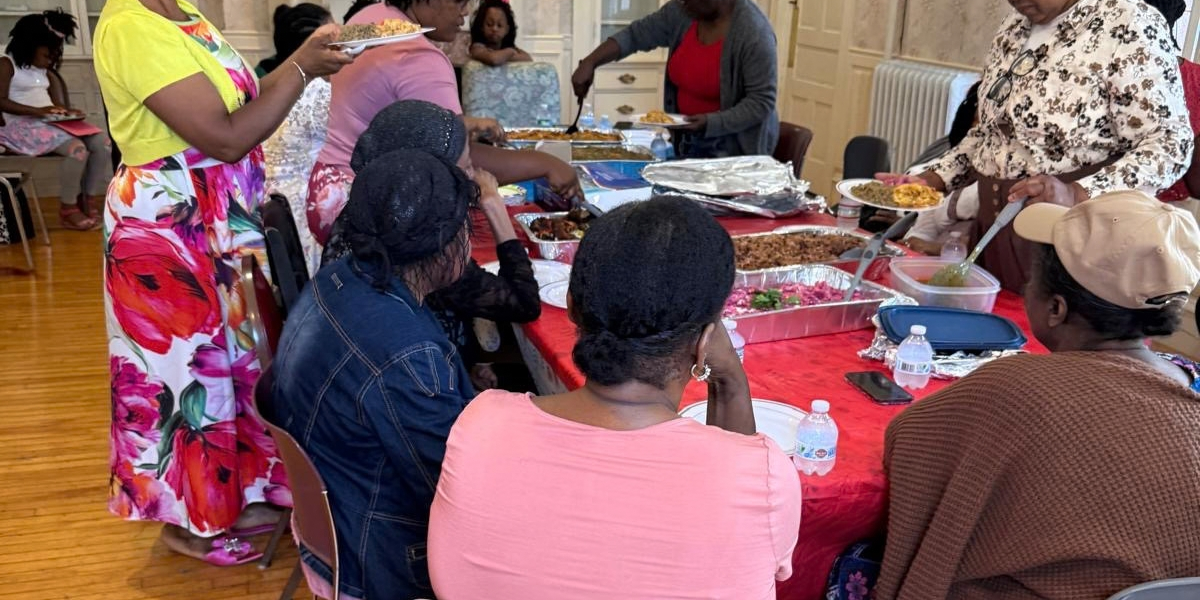
Following the termination of TPS, members of Haitian families gather in a kitchen for a shared meal and mutual support as they confront job losses and anxiety over the possibility of detention and deportation.
American Baptist churches serving Haitian communities are confronting those realities firsthand, and American Baptist Home Mission Societies (ABHMS) is providing funding to help congregations respond.
Over roughly four weeks beginning in late August, ABHMS has awarded $135,000 through One Great Hour of Sharing (OGHS) to provide emergency assistance to Haitian communities. Twenty-seven grants, averaging $5,000 each, are going to churches and ministries in Connecticut, Maine, Massachusetts, New York, New Jersey, Pennsylvania, and Ohio.
According to ABHMS’ Rev. Rothangliani R. Chhangte, senior associate for grants, partnerships, and strategy, there are approximately 80 Haitian American Baptist churches. Since the first grant application was submitted, ABHMS has received requests totaling $174,000.
These applications describe food insecurity and needs ranging from rent and utilities to transportation, temporary housing, and child care. They also identify needs for legal assistance and trauma counseling. In addition, some churches are helping people find qualified immigration assistance and providing reliable information on immigration procedures and emergency planning.
ABHMS acknowledges a growing, unmet demand for emergency assistance and is seeking an additional $250,000 to continue and expand its response. These funds will enable ABHMS to provide congregations with additional resources to address new and ongoing needs in Haitian communities. You can support ABHMS’ response by giving here.
From a federal decision to community mobilization
The crisis had been unfolding for months. In November 2025, the Department of Homeland Security announced that Haiti’s TPS designation would terminate on Feb. 3, 2026. Legal challenges quickly arose, preventing the termination from taking effect as scheduled while the dispute moved through federal court. On June 25, the U.S. Supreme Court ruled in Mullin v. Doe that the challengers were not entitled to court orders further postponing the termination, clearing the way for the Trump administration to proceed. According to U.S. Citizenship and Immigration Services, Haiti’s TPS designation ended at 11:59 p.m. on July 27.
Earlier that month, Rev. Dr. Mario Joseph, ABHMS partner liaison for Haitian communities in the organization’s Intercultural Ministries unit, began assessing the consequences of losing TPS for Haitian individuals, families, and congregations. A native Haitian, he embodies ABHMS’ longstanding relationship with the Haitian community, serving as a bridge between pastors and other Haitian leaders and the broader ABHMS organization.
Joseph’s assessment drew on conversations with Haitian pastors, regional leaders, and others across the American Baptist constituency. They reported job and income losses, housing and health insurance concerns, educational disruptions, fear of family separation, and growing anxiety about detention and deportation. Churches were increasingly being asked to provide emergency assistance, pastoral care, reliable information, and legal help.
“The legal questions are complicated, but what pastors see every day is very concrete,” Joseph said. “Someone has lost the ability to work. A family is worried about paying rent or buying groceries. Parents are asking what will happen to their children if they are detained. People are afraid to leave home, and pastors are being asked for answers no pastor can provide alone.”
In early August, ABHMS convened Joseph, Chhangte, and other ABHMS staff, along with a small group of Baptist leaders from Haitian communities, to consider a response. They determined that some challenges, such as defending against detention and deportation, would require outside expertise or longer-term work. Emergency grants, however, offered a way to act immediately through congregations that know their communities and can better assess local needs.
A church in Springfield, Ohio, is helping Haitian neighbors with food, transportation, rent, and expenses for qualified legal assistance. In New Jersey, a congregation reported plans to assist people struggling with food, utilities, and housing after job loss. Churches in the New York metropolitan area are pairing emergency financial assistance with immigration information workshops and referrals to attorneys and community organizations.
“For ABHMS, accompaniment means staying present when people’s lives become precarious and helping our churches turn compassion into practical care,” said Dr. Jeffrey Haggray, ABHMS executive director. “We cannot determine the legal outcome for any individual or family, but we can stand with our churches as they feed people, help keep families housed, connect them with trustworthy resources, and provide practical support during a time of profound uncertainty.”
A crisis larger than any one organization
The crisis facing the Haitian community extends beyond what ABHMS, let alone any individual congregation or ministry, can address independently. Elsewhere in the American Baptist family, American Baptist Churches USA (ABCUSA) is among the plaintiffs challenging the federal government’s immigration enforcement policy at houses of worship.
ABCUSA and the Alliance of Baptists joined other religious organizations in litigation filed in July 2025, following the federal government's rescission of restrictions that had limited immigration enforcement in or near so-called sensitive locations, including churches. In February 2026, a federal judge issued a preliminary injunction that bars warrantless immigration enforcement at houses of worship associated with the plaintiffs while the litigation proceeds. The order has specific limits; it does not make American Baptist churches immune from immigration enforcement.
Although the ABCUSA litigation is separate from the legal issues stemming from the loss of Haitian TPS, it raises a practical concern for congregations serving immigrant communities: What happens when people fear that attending worship, seeking assistance, or participating in church life could expose them to immigration enforcement?
Joseph believes that concern makes preparation increasingly important. He encourages congregations to consider forming crisis response teams to assess needs, coordinate assistance, and connect people to community resources while safeguarding confidentiality. Depending on the congregation, such a team might include pastors, deacons or trustees, social workers or counselors, financial coordinators, and someone responsible for legal referrals.
Individuals and families can prepare as well. This may include ensuring that trusted people know where immigration documents are kept and have necessary identifying information, such as an Alien Registration Number (A-number), when applicable. Parents may need to plan for who could care for their children. Households may need to consider access to bank accounts, powers of attorney, and other responsibilities that could become difficult to manage if someone is detained.
“The church does not replace an immigration lawyer, a social worker, or other professionals families may need,” Joseph said. “But the church can help individuals and families find reliable information, identify qualified assistance, develop practical plans, and meet immediate needs.”
Resources for churches and families
Congregations can draw on several resources as they prepare for immigration enforcement, connect people to assistance, and consider advocacy opportunities.
Prepare for immigration enforcement. The Baptist Joint Committee for Religious Liberty (BJC) offers “An Immigration Enforcement Preparedness Guide for Faith Communities,” along with updated information on litigation related to enforcement at houses of worship. These materials can help church leaders prepare for an immigration enforcement encounter. BJC Immigration Resources and Preparedness Guide
Locate someone in ICE or CBP custody. The U.S. Immigration and Customs Enforcement Online Detainee Locator System can help determine whether someone is in ICE custody or U.S. Customs and Border Protection custody and where they are being held. Online Detainee Locator System
Find legal assistance. The U.S. Department of Justice Executive Office for Immigration Review maintains a state-by-state list of pro bono legal service providers for people in immigration proceedings. Churches can use this resource to connect people with qualified assistance rather than attempting to provide immigration legal advice themselves. DOJ List of Pro Bono Legal Service Providers
Learn about legislative advocacy. Church World Service (CWS) urges its constituents to contact U.S. senators in support of legislation to extend TPS protections for Haitians. CWS reports that the House has passed legislation extending those protections through 2029 and that corresponding legislation, S. 4814, has been introduced in the Senate. Its online resource provides information about the legislation and a way for supporters to contact lawmakers. CWS Haitian TPS Advocacy Resource
The challenges raised by the end of Haitian TPS extend far beyond what any single congregation or organization can resolve. Yet the first weeks of ABHMS’ response have made clear that churches have an immediate role to play and that the need for resources persists.
Give to support ABHMS’ response to the Haitian TPS crisis here.
About ABHMS
American Baptist Home Mission Societies partners with American Baptists to promote Christian faith, cultivate Christ-centered leaders and disciples, and bring healing and transformation to communities across the United States and Puerto Rico.
About ABCUSA
American Baptist Churches USA is one of the most diverse Christian denominations today, with approximately 5,000 congregations comprised of 1.3 million members, across the United States and Puerto Rico, all engaged in God’s mission around the world.