

VALLEY FORGE, PA (ABNS 11/19/2026)—When creator and host Dr. Laura Miraz began imagining an audience for “Faith Forward: New Frontiers in Ministry,” a weekly podcast that launched in September, she had a modest starting point in mind: her friends.
After all, countless podcasts already covered religion, spirituality, and nearly every other subject imaginable. Would people want to listen to another?
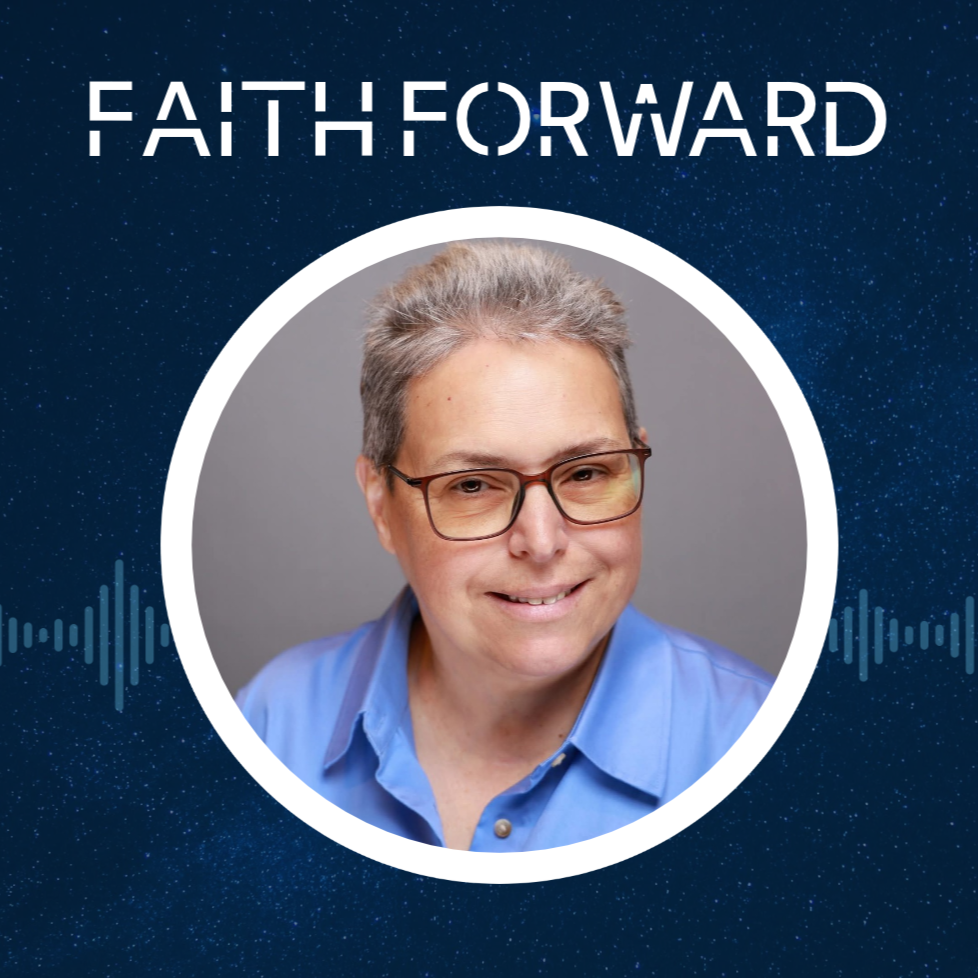
Dr. Laura Miraz, creator and host of “Faith Forward: New Frontiers in Ministry.”
But Miraz, longtime director of human resources at American Baptist Home Mission Societies (ABHMS), had something working in her favor. Nearly three decades of professional service with ABHMS in a variety of roles, along with years of volunteer leadership in American Baptist life, had introduced her to people whose experiences and perspectives she believed were worth sharing.
The result is “Faith Forward,” a series of conversations with Christian leaders about their ministries, convictions, and hopes for the church’s future. Each guest answers the same seven questions, yet the discussions take different directions, reflecting the individuals and their experiences.
With the inaugural season concluding in November and a second beginning in January 2027, Miraz spoke with Peter Bickel of the ABHMS marketing and communications department about how the podcast came to be, what she has learned from her guests, and why she believes a conversation can sometimes inspire more than its participants ever imagined.
Editor's note: This interview has been edited and condensed for length, clarity, and flow while preserving the substance of the conversation.
What inspired you to create “Faith Forward”?
For some time, I'd been thinking about how we might introduce people to American Baptist Home Mission Societies in a different way. We already have a website where people can learn about our ministries. I wanted to do something that would complement that information. Leadership seemed like a natural focus because empowering and developing leaders is so important to our work.
I thought, what if we invited American Baptist leaders to share something about themselves and their ministries? We could ask them about the current state of the church, what they envision for its future, and what gives them hope. We hear so much about churches closing, declining participation, and the emergence of a post-Christian society. People talk about being spiritual but not religious. There's a great deal of uncertainty about what the church's future might look like.
I know many wonderful American Baptists, and I believe they have something worthwhile to say about these topics. So, I came up with a series of questions and began thinking about potential guests to invite on the podcast.
And I will confess, I thought it would be fun.
You are a podcast listener yourself. Did the programs you enjoy influence how you designed “Faith Forward”?
Absolutely. I enjoy listening to podcasts, especially when I'm driving or riding my bicycle. They're entertaining, and I often learn something. I listen to podcasts about one of my hobbies, Star Trek, as well as Scripture, sermons, and music. Those are all things that interest me.
I enjoy podcasts that deliver information, but I particularly like the interview format. There's something appealing about the back-and-forth between people. You never know exactly where the conversation might go or what you might discover. As I considered different approaches, I kept coming back to the idea of a consistent interviewer who invites different people into the conversation.
I didn’t know if that was what the market wanted, but that's what the market's going to get!
I thought it could be an enjoyable way to learn about people and their experiences. And if listeners find it educational or discover something meaningful along the way, so much the better.
On streaming platforms, the podcast's introduction speaks of moving from belief to action. What does that mean to you?
If I'm being abundantly honest, the tagline came from the minds of communications and marketing experts. But the more I reflected on it, the more I realized how well it captures what I hope the podcast will accomplish. I want listeners to discover something about these Christian leaders and perhaps hear something that inspires them to act.
Maybe someone will hear a guest talk about Sabbath rest and renewal and decide to take it more seriously. Another listener might begin reflecting on their own philosophy of life—why they do what they do, what matters most to them, or what they hope for the church's future.
My hope is that something a guest shares will encourage listeners to do something beneficial for themselves and, in turn, for the people and communities around them. That's what moving from belief to action means to me.
Who did you hope would listen?
Initially, my friends and colleagues!
Then I started thinking beyond our staff at ABHMS, our board members, pastors, and lay leaders. Eventually, I thought, why not anyone who's interested in these conversations? I'm really open to anyone and everyone.
I suppose the core audience would be people of faith who remain hopeful about the future of the church. Despite everything we hear about declining attendance and shrinking congregations, there are people who can envision a future in which the church remains relevant and important.
And by church, I don't necessarily mean a building. I mean the people of God—people who love God and love God's people and find meaning in coming together as a community of faith. I think those people will find something of interest in “Faith Forward.”
Please describe a typical episode for someone who has not yet streamed “Faith Forward.”
Most episodes run about 20 to 30 minutes, sometimes a little longer. I begin by introducing the guest and sharing a brief biography. Many of these individuals have spent years, sometimes decades, in ministry and leadership, so I want listeners to know something about their backgrounds.
Then we work through seven questions. The final question invites the guest to offer a blessing, a prayer, or a word of encouragement to listeners.
I deliberately keep my own participation fairly limited. There are times when someone says something fascinating, and I think, oh, we could spend another half-hour talking about that! But I try to stay focused. The podcast isn't meant to be about me. It's an opportunity for listeners to get to know the person I'm interviewing and to hear what they have to share.
Throughout season one, did you ask each guest the same seven questions?
Yes. Each guest received the same questions—but I wasn’t expecting to receive the same or even highly similar answers. And I didn’t.
Did you provide the questions in advance?
I did. Sharing the questions ahead of time allows the guests to think about what they want to say. This isn't meant to be a "gotcha" interview. I want their responses to be thoughtful and focused, yet genuine to who they are.
I'm not a journalist. I'm simply someone who enjoys talking with interesting people about subjects I find meaningful. And I hope our listeners will find those conversations interesting, too.
As you approached the first season of “Faith Forward,” did you consider structuring it around particular issues facing the church and society today?
I certainly could have done it that way. I could have made a list of issues and decided that one month we'd talk about climate change, for example. Then I could have invited people whose ministries address climate change through a faith lens. But that's not the approach I wanted to take.
Each guest brings a distinct ministry context and set of experiences. Someone serving in a denominational organization may view things differently than a pastor leading a local congregation. Even among local churches, needs and priorities can vary widely.
A congregation with an older membership may face different challenges than one serving a younger or more diverse community. Some leaders may place particular emphasis on discipleship, while others focus more on justice or community needs. They're all coming from a Christian perspective and share values. But what matters most to them and how they respond to the questions can be quite different.
Rather than deciding which issues to discuss, I chose to let each leader's experiences and priorities shape the conversation. That's what makes the individual guest the variable.
What might listeners discover by hearing different people respond to the same questions?
What's powerful to me—and I see the Holy Spirit at work in this—is that everyone gets the same questions, yet their answers are so different.
You might hear someone talk about rest and renewal and think, "That resonates with me. I've been thinking about that myself." Another guest might offer a philosophy for living that speaks to you or express a hope for the church's future that you share. And then someone else might say something that makes you stop and think, "Oh, that's interesting. I've never considered it that way."
You may find people whose perspectives affirm your own, but you may also encounter ideas that challenge you to think differently. That's part of what I mean by moving from belief to action. Sometimes the first step is simply being willing to consider another perspective.
Or maybe you just enjoy spending 25 or 30 minutes listening to a couple of people having an interesting conversation. And when it's over, you think, "I wonder who Laura is going to talk to next week." That's fine, too!
How did you select your guests for season one?
Initially, I reached out to people I knew and admired—people whose leadership and ministries I respected and who I thought others would enjoy hearing from. I also wanted diversity among the guests, not only in terms of gender, race, and ethnicity, but in their ministry settings and experiences. That might mean inviting a regional executive minister, a local church pastor, or someone serving in another denominational ministry.
As I reviewed the biographies of our first-season guests, though, something occurred to me. Many had been in leadership for decades. They brought tremendous experience, but I realized we also needed to hear from people who were earlier in their ministries and from different generations.
We began incorporating some of those voices in the first season, and that's something I want to continue developing in season two.
You have recorded the entire first season. Has the experience lived up to your expectations?
When I started, my expectations were pretty modest. I thought we'd record one season, see whether there was interest and decide what to do from there. The response has been encouraging. I've had people tell me they've discovered the podcast and want to go back and listen to episodes they missed.
What really surprised me was hearing from people who wanted to know whether they could be guests. I certainly hadn't anticipated that!
I knew I would enjoy the experience because having fun was part of the reason I wanted to do it. But I've also been enriched by these conversations. It's a privilege to hear what people are thinking and to learn from their experiences.
Something else surprised me, too. A number of guests told me how meaningful it had been simply to prepare for the interview. They hadn't expected to spend time reflecting on these particular questions, and the process turned out to be valuable to them personally.
I hadn't anticipated that. We were creating something we hoped would benefit listeners, but the preparation itself was becoming a blessing to the people participating. It's a little like preparing a sermon, lecture or Bible study. Often, the person doing the preparation learns as much as anyone who eventually hears it.
You have worked with American Baptists for nearly 30 years. How has that experience influenced the podcast?
I began working professionally with ABHMS in 1997, but my involvement in American Baptist life goes back much further. Over the years, I've had opportunities to serve on boards and commissions and to meet some extraordinary people. I'm American Baptist by choice, and I wholeheartedly believe in the principles of American Baptists.
I've always enjoyed getting to know people and learning about what they do. Much of my professional life has involved working with leaders, supporting them and helping them become their best selves.
So it makes sense that I would be interested in conversations about leadership and ministry. I know there are people whose experiences and insights can help others, and I wanted to create an opportunity for those voices to be heard.
What has hosting “Faith Forward” taught you about yourself?
I think it's reaffirmed something I already believed: that even a relatively simple idea can make a meaningful contribution. The questions aren't especially complex or profound, but they've prompted people to think about their lives, their ministries, and what matters to them.
And something as simple as a conversation, recorded and made available to others, can become an instrument of empowerment, education, or edification. It might even be something that someone needed to hear at that particular moment.
That's a powerful possibility, and I'm grateful to be part of it.
Season two begins in January. What can listeners expect?
The same, and more!
We'll continue inviting American Baptist leaders to talk about their ministries, passions, and hopes for the future of the church.
One exciting development is that we're planning to feature the four keynote speakers for the American Baptist Biennial Mission Summit in Rochester in June. That will give listeners a chance to hear from them before the gathering.
We're also planning conversations with guests who are bilingual in English and Spanish. The idea is to record interviews with the same individuals in both languages. I think that could be particularly interesting. For example, someone who wants to improve their Spanish listening skills could listen to the Spanish conversation and then hear the English version.
And we have a surprise guest who isn't American Baptist but has done good work with American Baptists. I'm deliberately keeping that person's identity under wraps for now.
What would you say to someone considering listening for the first time?
I'd encourage them to explore “Faith Forward” and see what interests them. They don't have to start with the first episode or listen to them in any particular order.
Not every conversation will necessarily speak to every listener, and that's fine. Someone might be drawn to one guest or a particular subject, while another person finds something compelling in a completely different conversation. You might listen to one episode and decide to try another. Or you might discover that you want to go back and hear them all.
I'm the same me, asking the same questions. But every guest brings something different to the conversation. I hope listeners will find conversations that interest them, perhaps challenge them, and occasionally offer something they didn't know they needed to hear.
The full first season of “Faith Forward” will be available after Nov. 20, and the second season begins Jan. 8, 2027. The podcast is available to stream on all your favorite platforms via Linktree.