

A church helps refugees build new lives as they help build a new church
VALLEY FORGE, PA (07/13/2026)—When Pastor Joshua arrived in the United States in 2013, he was overwhelmed. His immigration process was stressful. He was worried that his limited English vocabulary would make work difficult. “I remember my first time when I started to work in the kitchen when they asked me, spoon... I couldn’t understand,” he reminisced in a meeting with the American Baptist Home Mission Societies staff in June 2026.
Having lost his parents at age five in tribal violence between Hutus and Tutsis, he spent his childhood on the streets of a busy city in the Democratic Republic of the Congo. At 15, he relocated to a refugee camp in Malawi, where he eventually helped pastor 250 people at a Pentecostal church.
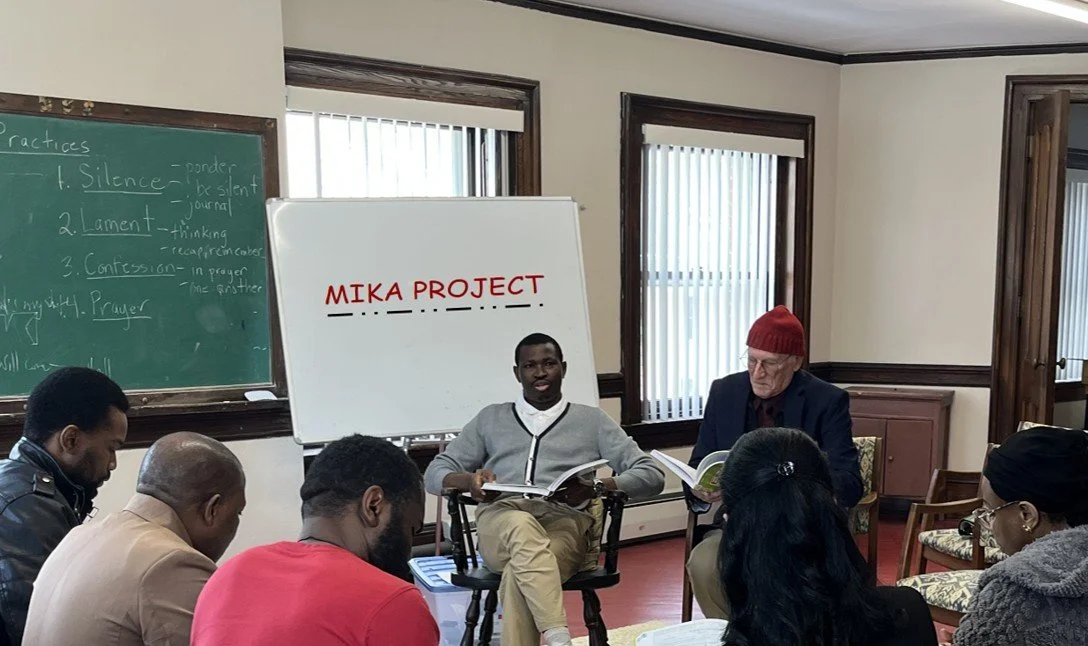
Pastor Joshua conducts an English class under the Mika Project, a church ministry supported by ABHMS.
Upon his arrival in the U.S. as a refugee, Pastor Joshua started attending an American Baptist church in his new hometown. “The people at church showed me love,” he said. The congregation began growing as more Congolese families joined it. Today, there are 50 Congolese members of the church.
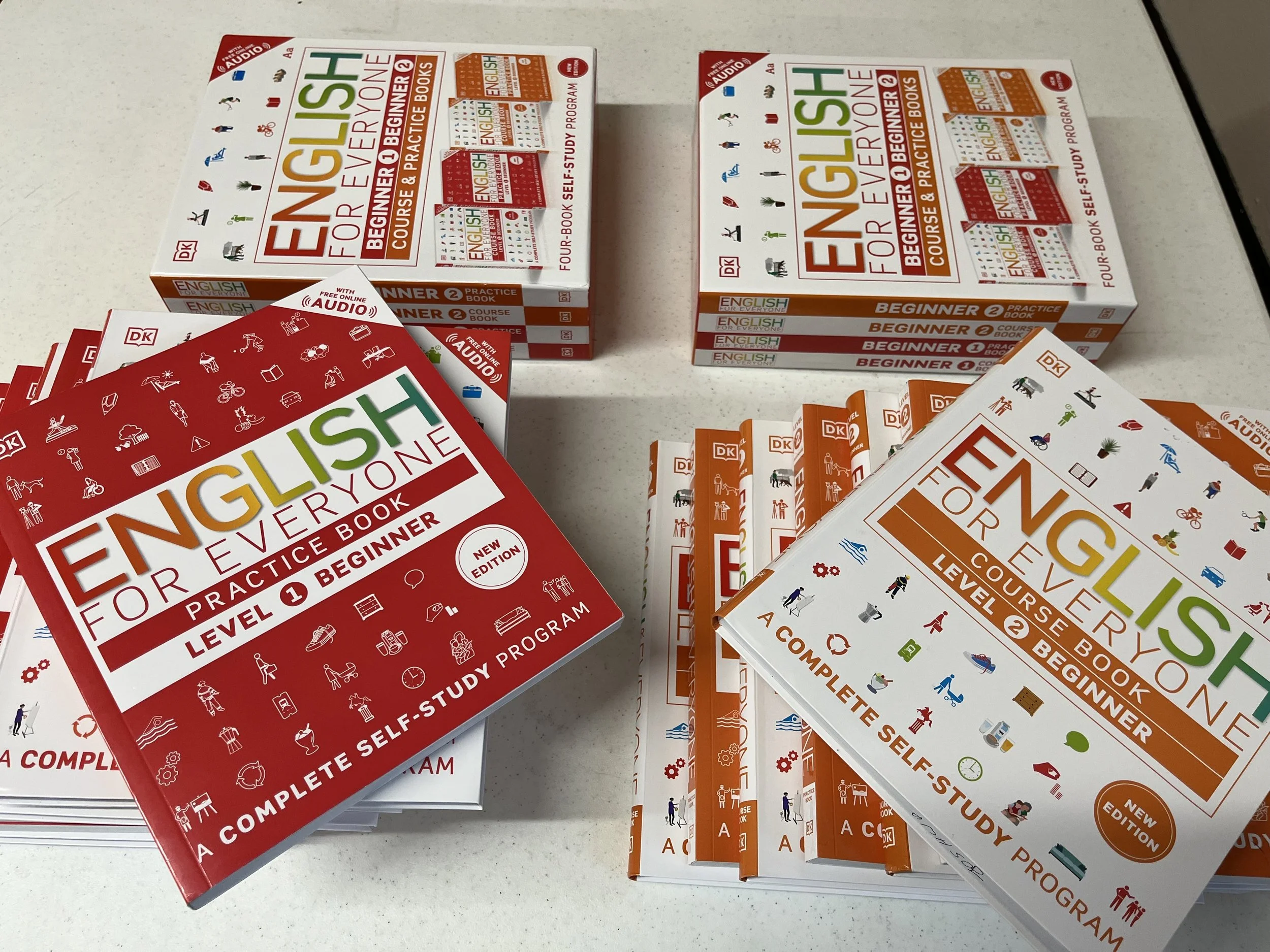
Following consultations with the Congolese members, many of whom expressed a need for English as a Second Language (ESL) instruction, the Mika Project, a ministry of the church supported by the American Baptist Home Mission Societies, offered them English classes. These classes represented much more than an opportunity to learn English. They have equipped them for successful integration in American society. At first, Pastor Joshua found employment as a cook. As his English skills improved, he advanced to kitchen supervisor at a major hotel. In the first year of the Mika Project, 13 Congolese men and women took the classes.
“When someone cannot understand English well, unfortunately, it is sometimes confused with ignorance,” said Rev. Linda Watkins, senior pastor of the church. "Part of doing justice is making sure that our brothers and sisters are empowered when it comes to helping them overcome language barriers.”
But there is a second side to this incredible story. As the church shared its bounty with the Congolese members of the congregation, they offered a gift to the church, too: they helped revitalize it. A dwindling congregation some years ago, now it has a great deal of energy. “I remember the first time we didn’t have a Sunday school because there’s no kids in the church, and for now we have more than 20 kids in Sunday school,” said Pastor Joshua. “Our brothers and sisters have been a blessing to the church,” added Watkins.
The Mika Project also provides scholarships for Congolese children to go to Camp Wightman in the summer. In 2025, 20 children attended, and another 20 are going this year. The camp is not just recreational; it involves leadership development, spirituality work, and connection to broader Christian networks.
As the church is now 60 percent Congolese, and grows rapidly through this community, it moves toward intercultural leadership with equal representation. Pastor Joshua, who was married at the church and welcomed his son here, is now on the church’s pastoral staff. As the church helps refugees build new lives, refugees are helping build a new church, connecting people with one another and, together, with God.
To support initiatives like the Mika Project, give here.
By Rev. Dr. Anna Piela, ABHMS senior writer and editor of The Christian Citizen